Pordata: North shows best secondary education results
New data from Pordata shows that secondary school completion rates are higher in the North, while Lisbon, Setúbal, and the Algarve register lower completion rates.
Tuesday, 8 September
National exams, schools and universities, and the school-year calendar.

New data from Pordata shows that secondary school completion rates are higher in the North, while Lisbon, Setúbal, and the Algarve register lower completion rates.
With one week remaining before the school year starts, over 2,000 teaching positions are currently unfilled. The Minister of Education stated that the government has enough teachers to cover these needs and noted that daily teacher placements will begin on September 18 to reduce the time students go without a teacher. Additionally, the government has formed a working group to create a 'green channel' for foreign students facing residency regularization delays through AIMA when enrolling in higher education.

The professional school Prepara Portugal is hosting a free conference in Porto on September 12 regarding immigrant professionalization, AI, cybersecurity, and entrepreneurship. The event includes a contest for innovative projects with prizes up to 3,000 euros and a graduation ceremony for recent students.
The dropout rate for CTeSP (Higher Professional Technical Courses) after the first year rose from 19% to 29% between the 2015/16 and 2022/23 academic years. Analyses suggest the increase is linked to inadequate institutional support during mandatory internships.

The Azorean government has opened two separate calls for five doctoral scholarships funded by the Regional Fund for Science and Technology. Four scholarships are for non-academic environments in Data Science, Quantum Computing, Cybersecurity/Defense, and AI, while one is for medical and health sciences (Human Epidemiology) in an academic context. Applications close on November 6 for the academic scholarship and December 7 for the non-academic ones.
The political party Chega has proposed giving priority access to schools and daycare centers to children of Portuguese nationals, EU citizens, and Social Security contributors. Constitutional experts consulted by PÚBLICO state that this proposal is likely unconstitutional and discriminatory.
The consumer protection organization DECO PROteste advises families to audit existing supplies at home and wait for teacher-provided lists before shopping to avoid waste. Families are also encouraged to compare prices across different retailers, set a strict budget, and check eligibility for public support schemes such as free textbook vouchers and school social action subsidies.

For the first time, students in the first year of the Miranda do Douro school group will have a dedicated Mirandese language textbook, developed by local teachers and specialists. The book is the first in a planned series for different grade levels and will be officially presented on 17 September.

The PSP police is launching the 'Start of the 2026/2027 School Year' operation nationwide starting Monday, September 7, running through September 25. Officers will focus on patrolling schools and routes taken by students, teachers, and staff as part of the 'Escola Segura' (Safe School) program.
The Institute of Education, Quality and Assessment (Eduqa) has published the exam paper and official grading criteria for the 12th-grade national Mathematics A special season exam.

A study by the Francisco Manuel dos Santos Foundation indicates that the number of students in Portugal has exceeded two million despite declining birth rates, a growth directly attributed to the rise in immigration. The report also highlights persistent regional inequalities in the education system.
The National Education Federation (FNE) has requested data from the Ministry of Education regarding unfilled teacher vacancies as the school year begins. They are seeking transparency on specific recruitment groups, affected municipalities, and the total number of students without full-time teachers following the most recent recruitment cycles completed on August 28 and September 4.

The Madeira Teachers' Union (SPM) is protesting the placement process for the 2026/2027 school year, citing a significant reduction in hiring (216 teachers this year compared to over 400 last year) despite a rising student population. A protest/public demonstration is scheduled for Wednesday, September 9, in Funchal to voice grievances regarding the staffing crisis.

A study titled 'Respirar Fundo' monitored air pollutants at 12 schools across various municipalities and found levels of PM10, PM2.5, and NO2 often linked to road traffic during peak hours. Some schools recorded levels that would violate stricter European air quality limits due to take effect in 2030, with specific incidents of high pollution identified in schools in Ponte de Lima, Barcelos, and Vila Nova de Gaia.
The school year begins between September 11 and 15, 2026, for most students, with secondary school starting on September 21. The first term ends on December 15, 2026; Christmas holidays run from December 16 to 31, with school resuming January 4, 2027. The Carnival break is February 8–10, 2027; the Easter break is March 22 to April 2, 2027, with the final term beginning April 5, 2027.
The Financial Times ranking for 2026 places the Nova School of Business and Economics (Nova SBE) in second place globally. In total, five Portuguese institutions feature in the top 100, with notable improvements from Iscte Business School and Católica Porto Business School.
New data from Pordata shows Portugal now has over two million students across all levels of education. The report highlights significant territorial disparities, challenges in students transitioning between levels, and ongoing difficulties regarding teacher renewal in basic and secondary education.
A Pordata report indicates that secondary school completion rates within the expected three-year period are significantly lower in the Greater Lisbon, Setúbal Peninsula, and Algarve regions compared to the national average. The report also highlights a growing number of foreign students in Portuguese higher education, with Brazil, Angola, Guinea-Bissau, France, and Italy being the top countries of origin.

The National Confederation of Parents' Associations (Confap) is proposing an earlier start to the school year, at the beginning of September, combined with more frequent breaks throughout the year to align with Northern European models. School directors oppose the idea, arguing the current calendar is better suited to Portugal's climate and suggesting that municipalities should instead provide more non-academic activities during school holidays to support families.

Over two million students are returning to classes this week across Portugal. Data from Pordata shows an increase of nearly 9,000 students in the first cycle of primary education compared to last year, with higher education enrollment also seeing growth.

Data shows higher secondary school completion rates in the north compared to the Greater Lisbon, Setúbal, and Algarve regions, attributed by the 'Missão Escola Pública' movement to a structural teacher shortage. While some teaching master's programs are seeing a modest rise in enrollment, the number of new graduates remains below the rate of annual retirements.

Private and cooperative preschools participating in association contracts with the state report that the Ministry of Education is failing to respond to inquiries regarding contract continuity for the 2026/2027 school year. Communication platforms (SIGRE) and dedicated email channels for the new Agência para a Gestão do Sistema Educativo (AGSE) are reportedly non-functional or unresponsive.
The government has introduced new rules for public schools regarding teacher recruitment, overtime, and the accumulation of functions. These include new requirements for hiring degree holders (licensees) who do not meet initial criteria, a digital platform (AGSE/SIGRHE) for declaring availability for overtime and secondary functions, and a monthly 750-euro salary bonus for teachers who are eligible for retirement but choose to continue teaching in high-need areas.
A report from EU Kids Online 2025 reveals that 85% of Portuguese youth aged 9-17 use generative AI, with 47% utilizing it for school tasks. Usage for schoolwork increases with age, reaching 63% among those aged 15-17, and varies by socioeconomic status.

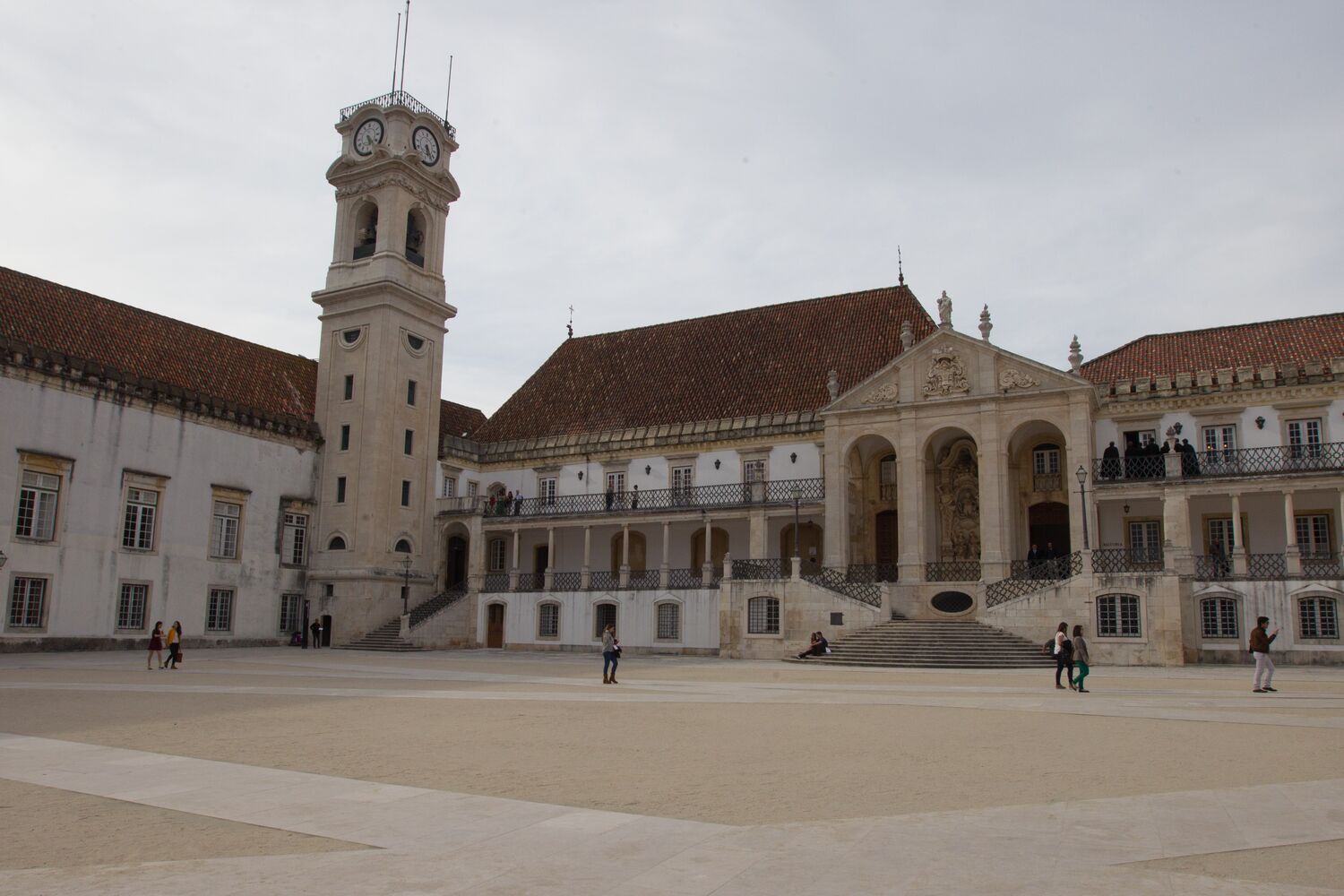
The University of Coimbra currently hosts over 3,000 students from Brazil, primarily in law programs. The institution reports a record high of international students overall, representing 120 nationalities, with a focus on increasing future enrollment from other Portuguese-speaking African countries.